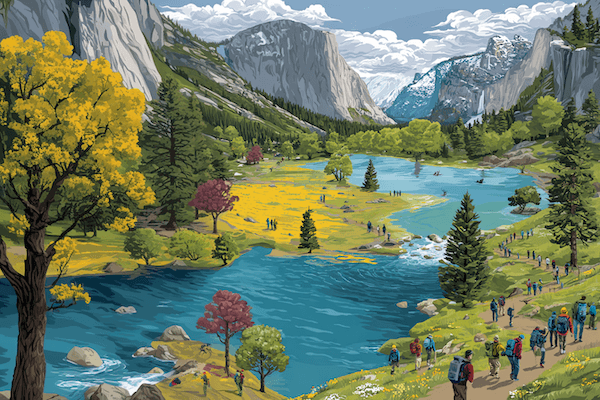
How immersive technology can transform climate literacy at America's most iconic natural landmarks
Executive Summary
America's national parks stand at an inflection point. While visitation reached 325 million in 2023, the landscapes visitors come to experience are fundamentally changing. Glacier National Park's namesake glaciers are disappearing—26 of 150 glaciers remain, and scientists predict they could vanish entirely by 2030. Wildfire seasons now extend months beyond historical norms. Species are migrating northward and upward, rewriting ecological relationships that have existed for millennia.
Yet our visitor education infrastructure remains largely unchanged, built for a static view of nature rather than the dynamic, urgent story of planetary transformation. As climate literacy becomes a federal priority—mandated by NOAA, EPA, and integrated into National Science Education Standards—national parks must evolve their educational mission: not just showing visitors what nature is, but what it was and what it will become.
This article examines how next-generation immersive dome theaters can transform national parks into climate education hubs, engaging multiple generations in the most urgent environmental story of our time while building long-term public support for conservation.
The Climate Crisis is Rewriting Our Parks
Visible Loss, Accelerating Change
The evidence is no longer subtle. Visitors to national parks today witness transformation in real-time:
Glacier National Park once held 150 active glaciers in 1850. Today, 26 remain. Grinnell Glacier has lost 90% of its mass since 1966. The iconic Going-to-the-Sun Road, carved to showcase these frozen giants, may soon lead to bare mountainsides. Park rangers now give "climate talks" rather than "glacier talks"—a linguistic shift that reflects an uncomfortable reality.
Yellowstone National Park experienced its worst wildfire season in 2022, with flames consuming over 100,000 acres in a matter of weeks. Fire suppression strategies developed over a century are obsolete. The ecosystem is adapting: lodgepole pine seedlings now struggle to regenerate at lower elevations where temperatures exceed their survival threshold. The park that defined America's conservation ethic is becoming a different ecosystem before our eyes.
Everglades National Park faces existential threat from sea-level rise and altered precipitation patterns. Saltwater intrusion pushes up to six miles inland, killing freshwater vegetation and contaminating aquifers that serve 8 million Floridians. The park superintendent estimates that without intervention, 60% of the Everglades' freshwater wetlands could become saltwater marsh by 2060.
Joshua Tree National Park may lose its namesake species entirely. Research published in Ecosphere projects that without significant emissions reductions, suitable habitat for Joshua trees could decline by 90% by 2070. The park's iconic silhouettes—immortalized in millions of photographs—may become historical artifacts.
Disrupting the Visitor Experience
Climate impacts extend beyond ecological transformation to operational challenges:
Season compression: Comfortable visiting windows shrink as summers become dangerously hot and shoulder seasons face unpredictable weather
Infrastructure stress: Roads, bridges, and facilities designed for 20th-century weather patterns fail under extreme events
Safety concerns: Wildfire smoke, heat advisories, and flood warnings increasingly disrupt planned visits
Diminished experiences: Wildflower blooms shift, wildlife migrations alter, iconic viewsheds change
Park administrators face a paradox: visitors come seeking pristine wilderness, but increasingly encounter evidence of planetary-scale disruption. Without proper context and education, this disconnect breeds confusion, denial, or despair.
The Educational Mandate: From Static Preservation to Dynamic Storytelling
Federal Climate Literacy Requirements
National parks have always been "America's best idea"—democratic landscapes where citizens connect with nature. But their educational mandate is expanding. The National Park Service's Climate Change Response Strategy explicitly commits parks to:
Science communication: Translate climate research into accessible public understanding
Visitor engagement: Create meaningful connections between park experiences and global climate patterns
Youth education: Build climate literacy in next-generation visitors and advocates
Community partnerships: Collaborate with schools, universities, and NGOs on educational programming
This isn't optional. The National Oceanic and Atmospheric Administration (NOAA) identifies climate literacy as a national priority. The Environmental Protection Agency (EPA) provides grants specifically for climate education infrastructure. The Next Generation Science Standards (NGSS)—adopted by 44 states—mandate that students understand climate systems, human impacts, and solution pathways.
National parks are uniquely positioned to deliver this education. They're trusted institutions (85% favorability rating), they reach diverse audiences (325 million annual visitors), and they offer direct sensory engagement with natural systems. But they need infrastructure to match the moment.
Beyond the Visitor Center
Traditional interpretive methods—static exhibits, printed brochures, ranger-led walks—remain valuable but insufficient for the complexity and urgency of climate education. Consider the challenge:
Temporal scale: Climate change unfolds across decades and centuries, yet visitors spend hours or days in parks
System complexity: Understanding climate requires grasping interconnections between atmosphere, oceans, ice, ecosystems, and human activity
Emotional navigation: Climate education must balance scientific honesty with hope, urgency with agency
Multi-generational appeal: Effective programs must engage 6-year-olds and 60-year-olds simultaneously
Static exhibits can't effectively convey temporal change. Printed materials struggle with system complexity. Even skilled rangers, limited by time and weather, reach only a fraction of visitors.
What's needed is immersive educational infrastructure that can:
Show time: Compress decades of change into minutes of experience
Reveal systems: Make invisible connections visible
Tell multiple stories: Adapt content for school groups, families, and specialized audiences
Inspire action: Connect emotional engagement to concrete next steps
Operate year-round: Function regardless of weather, season, or fire closure
This is where next-generation immersive dome theaters enter the equation.
Immersive Domes as Climate Education Infrastructure
Technology Meets Conservation Storytelling
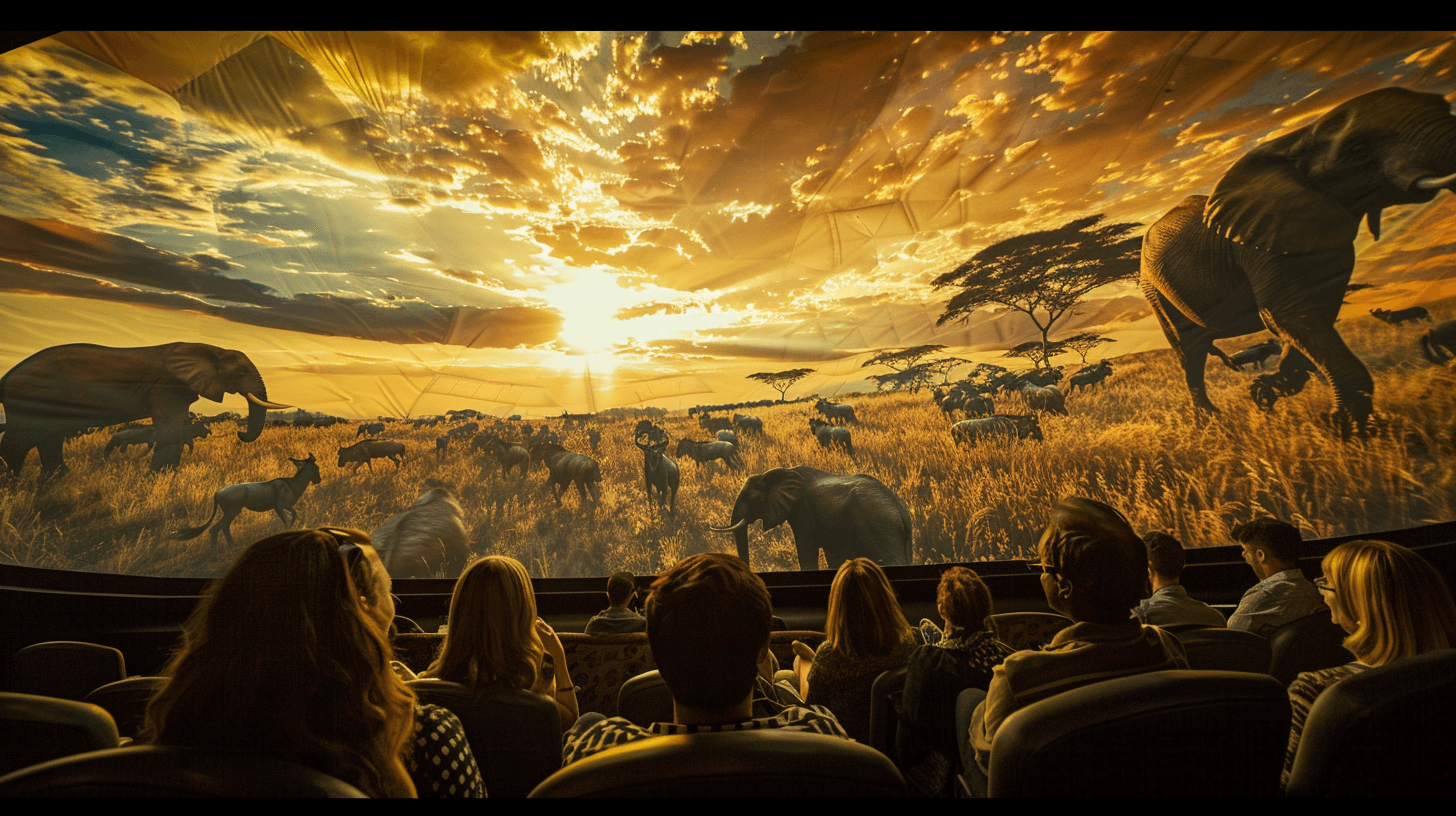
Imagine a school group from Phoenix visiting Glacier National Park. Inside a 50-foot immersive dome theater, they recline beneath a seamless screen that fills their entire field of vision. The show begins:
Scene 1: Glacier National Park, 1850. The landscape emerges in photorealistic 3D—towering ice fields, pristine valleys, crystalline streams. Students literally crane their necks to take in the scope. The narration establishes baseline: "This is what 150 active glaciers looked like."
Scene 2: Time-lapse acceleration. Decades compress into seconds. Glaciers visibly retreat. Ice walls shrink. Streams change course. The audio shifts—the rumble of ice gives way to the trickle of water. By 2024, only 26 glaciers remain. Students see 174 years of transformation in 3 minutes.
Scene 3: Future projection. The screen displays scientific modeling: "If current trends continue..." The landscape in 2050. Glaciers gone. New vegetation patterns. Altered watersheds. Then: "If we reduce emissions significantly..." Alternative future. Stabilized glaciers. Restored ecosystems. The message lands viscerally: The future is not fixed. We have agency.
Scene 4: Zoom out to planetary scale. The students see how Glacier connects to global patterns—atmospheric circulation, ocean currents, the jet stream. They understand that melting here relates to rainfall in Kansas, storm intensity in Louisiana, drought in California.
Scene 5: Hope narrative. Success stories: glacier protection efforts in Iceland, massive reforestation in the Sahel, coral restoration in the Caribbean. Young climate activists, scientists, engineers. The implicit message: Your generation will solve this.
The show concludes after 22 minutes. Students emerge blinking into daylight, having experienced temporal and spatial scales impossible through any other medium. Now when they hike to the few remaining glaciers, they understand the context. They're not just seeing nature—they're witnessing history and imagining futures.
Why Immersive Domes Excel at Climate Education
1. Temporal Storytelling: Making Change Visible
Climate change's greatest communication challenge is its temporal scale. Human brains evolved to notice immediate threats—predators, storms, rivals. We struggle to perceive changes that unfold across decades.
Immersive domes solve this through time-compression storytelling:
"Glacier Timeline: 1850-2050": Centuries of ice retreat condensed into minutes
"A Day in the Life of a Coral Reef": 24 hours accelerated to show daily temperature stress cycles
"Forest Fire Season: Then and Now": Compare 1950s fire patterns (June-August) with 2020s patterns (April-November)
"Migratory Shift": Show butterfly, bird, and caribou populations moving northward over 50 years
These aren't abstract graphs—they're immersive visual experiences. Visitors see glaciers retreating, watch forests burning earlier each year, follow species migrating into new territories.
2. Systems Thinking: Revealing Invisible Connections
Climate isn't one thing—it's interconnected systems. Immersive domes can make these connections visible:
Example: "Fire, Wolves & Ecosystem Balance" (Yellowstone)
The narrative traces connections:
Fire suppression policies (1900-1970) → Forest density increases
Dense forests → Beetle outbreaks thrive
Dead trees → Fire fuel accumulates
Climate warming → Longer fire seasons
Wolf reintroduction (1995) → Elk behavior changes
Elk avoid valleys → Riverside vegetation recovers
Vegetation recovery → Stream bank stability → Better water retention
Water retention → Fire resilience improves
The dome experience shows these connections dynamically. Viewers see the ecosystem as a living web, not isolated components. They understand: "Everything is connected to everything else."
3. Future Scenarios: Exploring Possibility Space
One of climate education's most powerful tools is scenario modeling: "What happens if...?"
Immersive domes can present multiple futures:
"Everglades 2060: Three Pathways"
Scenario A: Current trajectory (3-4°C warming). Sea level rises 3 feet. Saltwater intrusion accelerates. 60% of freshwater wetlands become saltwater marsh. Wading bird populations collapse.
Scenario B: Moderate action (2-2.5°C warming). Sea level rises 1.5 feet. Aggressive restoration efforts. Engineered water flows. Species adapt but habitat fragments. 30% loss.
Scenario C: Transformative action (1.5°C warming). Sea level rises under 1 foot. Comprehensive restoration. Resilient ecosystems. Adaptation success stories.
Visitors experience each scenario immersively—flying over different future landscapes, seeing different animal populations, hearing different soundscapes. The message: Our choices matter. The future is not predetermined.
4. Multi-Generational Engagement
A six-year-old, a sixteen-year-old, and a sixty-year-old all sit in the same dome show. Each takes away something different:
Age 6: Visceral excitement ("The glacier was HUGE!"), emotional connection to animals ("The pika was so cute!"), sensory wonder (surround sound, immersive visuals)
Age 16: Scientific understanding (carbon cycles, feedback loops), connection to social movements (climate activism), future orientation (career possibilities)
Age 60: Historical context (seeing change across their lifetime), legacy thinking (what world for grandchildren), practical action (home energy efficiency, civic engagement)
The same content, multiple entry points. This multi-generational appeal is critical for building sustained climate action coalitions.
5. Curriculum Integration
For school groups—200 million students annually visit educational sites—immersive content can align directly with Next Generation Science Standards (NGSS):
MS-ESS3-3: Apply scientific principles to design method for monitoring/minimizing human impact on environment
MS-ESS3-4: Construct argument supported by evidence for how increases in human population/consumption affect Earth's systems
HS-ESS3-1: Construct explanation based on evidence for how availability of natural resources, natural hazards, and climate changes have influenced human activity
Teachers can prepare students before the visit (pre-show curriculum), use the dome experience as the core learning moment, and follow up with projects (post-show citizen science engagement). The National Park becomes the classroom, the dome the textbook that comes alive.
Multi-Generational Programming: From Field Trips to Family Adventures
School Curriculum-Aligned Programs
The most scalable impact comes from integrating national park dome experiences into formal education:
Elementary School (Grades 3-5): "Meet the Animals"
Focus: Charismatic megafauna, habitat needs, adaptation
NGSS Alignment: Life science standards on organism-environment relationships
Content: Grizzly bears adapting to changing berry seasons, pika moving upslope, butterflies emerging earlier
Duration: 20 minutes
Post-Show: Junior Ranger climate change activity booklet
Middle School (Grades 6-8): "Systems & Solutions"
Focus: Ecosystem interconnections, human impacts, solution pathways
NGSS Alignment: Earth and space science standards on climate, human impacts
Content: Carbon cycle, feedback loops, renewable energy, restoration success stories
Duration: 30 minutes
Post-Show: Data collection for park climate monitoring program (citizen science)
High School (Grades 9-12): "Your Future, Your Choice"
Focus: Climate science depth, career pathways, activism & policy
NGSS Alignment: High school Earth science, engineering design standards
Content: Advanced climate modeling, conservation careers (restoration ecology, climate policy, renewable energy engineering), youth climate movement profiles
Duration: 40 minutes
Post-Show: Facilitated discussion, career fair with park scientists and rangers
Impact Potential: If every national park with 1+ million annual visitors added a curriculum-aligned dome program:
59 major parks
Average 20,000 students per park per year
1.18 million students annually receiving immersive climate education
That's roughly 5% of all U.S. middle and high school students
Family Programming: Making Climate Accessible
Not every visitor is a school group. 60% of park visitors are families—parents, grandparents, children. These audiences need different content:
"Yellowstone: Stories of Fire & Ice" (Family-friendly, ages 6+)
Narrative structure: Follow three animals (grizzly bear, wolf, pika) across seasons
Climate integration: Show how fire seasons affect food availability, how warming affects den site selection
Emotional tone: Wonder + concern + hope
Duration: 25 minutes
Takeaway: "Yellowstone is changing, but we can help"
"Glacier Giants: Past, Present & Future" (Family-friendly, ages 8+)
Narrative structure: Time-travel format—visit 1850, 2024, and 2050
Climate integration: Visual glacier retreat, species migration, water cycle changes
Emotional tone: Awe (historical grandeur) + urgency (current loss) + agency (future possibilities)
Duration: 28 minutes
Takeaway: "Our choices shape tomorrow's Glacier"
"Galápagos: Evolution Accelerated" (Family-friendly, ages 10+)
Narrative structure: Darwin's observations meet modern climate science
Climate integration: How warming waters affect marine iguanas, how drought patterns impact finch populations
Emotional tone: Scientific curiosity + real-time evolution + adaptation hope
Duration: 32 minutes
Takeaway: "Evolution doesn't stop—species adapt, but need time and space"
Evening Programs: Community Engagement
Extend dome use beyond daytime visitors:
"Park After Dark: Climate Science Talks"
Monthly series featuring park scientists, university researchers, Indigenous knowledge holders
45-minute immersive presentation + 30-minute Q&A
Topics: "How We Track Glacier Melt," "Traditional Ecological Knowledge & Climate Adaptation," "What Wildlife Cameras Reveal"
Build community connections between parks and nearby residents
"Stargazing & Climate"
Combine planetarium-style star identification with atmospheric science
Show how light pollution connects to energy use and climate
Highlight how climate affects astronomical viewing conditions
Partner with amateur astronomy clubs
Case Study Models: Content for Major Parks
Yellowstone: "Fire, Wolves & Ecosystem Balance"
The Story: Yellowstone's ecosystem is a masterclass in complex systems. The narrative traces:
Historical baseline: Pre-1900s fire regimes, predator-prey balance
Fire suppression era: 1900-1970s policy to eliminate all fires → unnatural forest density
Wolf extirpation: 1926, last wolves killed → elk populations explode
Cascade effects: Overgrazing → riverside vegetation loss → stream erosion
Wolf reintroduction: 1995 → trophic cascade → ecosystem rebalancing
Modern fire regime: Restoration of natural fire patterns + climate warming = new patterns
Climate impacts: Longer fire seasons, beetle outbreaks, drought stress
Future pathways: Adaptive management strategies
Immersive Elements:
Fly through burning forests in slow-motion (show fire as ecological process, not disaster)
Follow wolf pack hunting elk (show behavioral ecology)
Time-lapse: Riverside vegetation recovery after wolf return
Heat-map visualization: Temperature changes across park elevations
Split-screen futures: With/without climate action
Educational Goals:
Understand trophic cascades
See fire as natural ecological process
Grasp human impact (suppression, extirpation, reintroduction)
Connect local change to global climate patterns
Target Audiences: Middle school+, families, adult education groups
Duration: 30 minutes
Funding Partners: Greater Yellowstone Coalition, Yellowstone Forever, Wyoming Tourism, National Parks Conservation Association
Everglades: "Water, Climate & Florida's Future"
The Story: The Everglades' fate is Florida's fate. Water is the protagonist:
Historical flow: "River of Grass" covering 4,000 square miles, flowing south from Lake Okeechobee to Florida Bay
Engineering era: Levees, canals, agricultural conversion → 50% of original wetlands lost
Ecological consequences: Wading bird populations crash, water quality degrades, natural flow disrupted
Climate pressures: Sea level rise, altered precipitation (more intense hurricanes + longer droughts)
Saltwater intrusion: Visual journey showing how rising seas push salt inland, killing freshwater vegetation
Urban impacts: 8 million people depend on Everglades aquifer—climate threatens water supply
Restoration efforts: Comprehensive Everglades Restoration Plan (CERP) as largest environmental restoration in history
Future scenarios: Three pathways based on emission trajectories and restoration commitment
Immersive Elements:
Bird's-eye journey: Fly the entire historical Everglades flow path (show original scale)
Underwater scenes: Seagrass beds transitioning to mud flats as salinity increases
Split-screen: Wet season flooding vs. dry season drought (show extremes intensifying)
Microscopic view: Show freshwater vs. saltwater species (make salinity impacts tangible)
Infrastructure overlay: Visualize levees, pumps, and restoration projects
Educational Goals:
Understand water cycle and watershed connectivity
Grasp sea-level rise impacts beyond coastal flooding (inland salinization)
See urban/environmental interdependence
Appreciate restoration as long-term commitment
Target Audiences: Elementary through adult, strong appeal to Florida residents
Duration: 28 minutes
Funding Partners: South Florida Water Management District, Everglades Foundation, Florida Department of Tourism, National Parks Conservation Association
Yosemite: "Granite, Glaciers & a Changing Sierra"
The Story: Yosemite's iconic geology tells a climate story written over millennia:
Deep time: Granite formation 100 million years ago, tectonic uplift
Ice age sculpting: Glaciers carving valleys, polishing domes, creating Yosemite's signature landforms
Interglacial periods: Climate oscillations visible in geological record
Modern baseline: John Muir's observations (1870s-1910s) as reference point
20th century changes: Temperature records, precipitation patterns, snowpack measurements
Current impacts: Declining snowpack (down 30% since 1950), earlier snowmelt, reduced summer water flows
Cascade effects: Lower water → stressed trees → bark beetle vulnerability → increased fire fuel
Giant sequoia resilience: These ancient trees have survived climate changes before—what makes this time different? (rate of change)
Future Sierra: Projections for 2050, 2075, 2100 under different scenarios
Immersive Elements:
Zoom through geological time: See granite forming, mountains rising, glaciers advancing
Seasonal time-lapse: Show 1950s snowpack vs. 2020s snowpack (make the 30% reduction visual)
Microscopic journey: Enter a tree trunk under beetle attack (show climate-beetle-tree connection)
Fire simulation: Experience controlled burn vs. mega-fire (show difference in intensity and ecosystem impact)
Sequoia perspective: Stand among 3,000-year-old trees, see centuries pass, show their climate resilience and current stress
Educational Goals:
Understand geological timescales (deep time literacy)
Connect snowpack to ecosystems and human water use
See rate of change as critical variable (not just absolute temperature)
Appreciate giant sequoias as living climate archives
Target Audiences: All ages, strong appeal to California residents concerned about water
Duration: 32 minutes
Funding Partners: Yosemite Conservancy, California State Parks, California Natural Resources Agency, Sierra Nevada Conservancy
Galápagos: "Evolution in Real Time: Climate Adaptation"
The Story: Darwin's "natural laboratory" shows evolution accelerating under climate pressure:
Darwin's observations: 1835 voyage, finch diversity, tortoise variations
Evolution primer: Natural selection, adaptation, speciation
Modern research: Peter and Rosemary Grant's 40+ year finch study
Climate variability: El Niño (wet) vs. La Niña (dry) cycles
Measurable evolution: Finch beak size changing year-to-year in response to food availability
Marine impacts: Warming waters affecting marine iguana foraging, penguin survival
Climate intensification: El Niño events becoming more frequent and severe
Adaptation limits: How fast can species evolve? What happens when climate change outpaces adaptation?
Conservation response: Captive breeding, habitat protection, invasive species removal
Planetary metaphor: Galápagos as microcosm—what happens here signals global patterns
Immersive Elements:
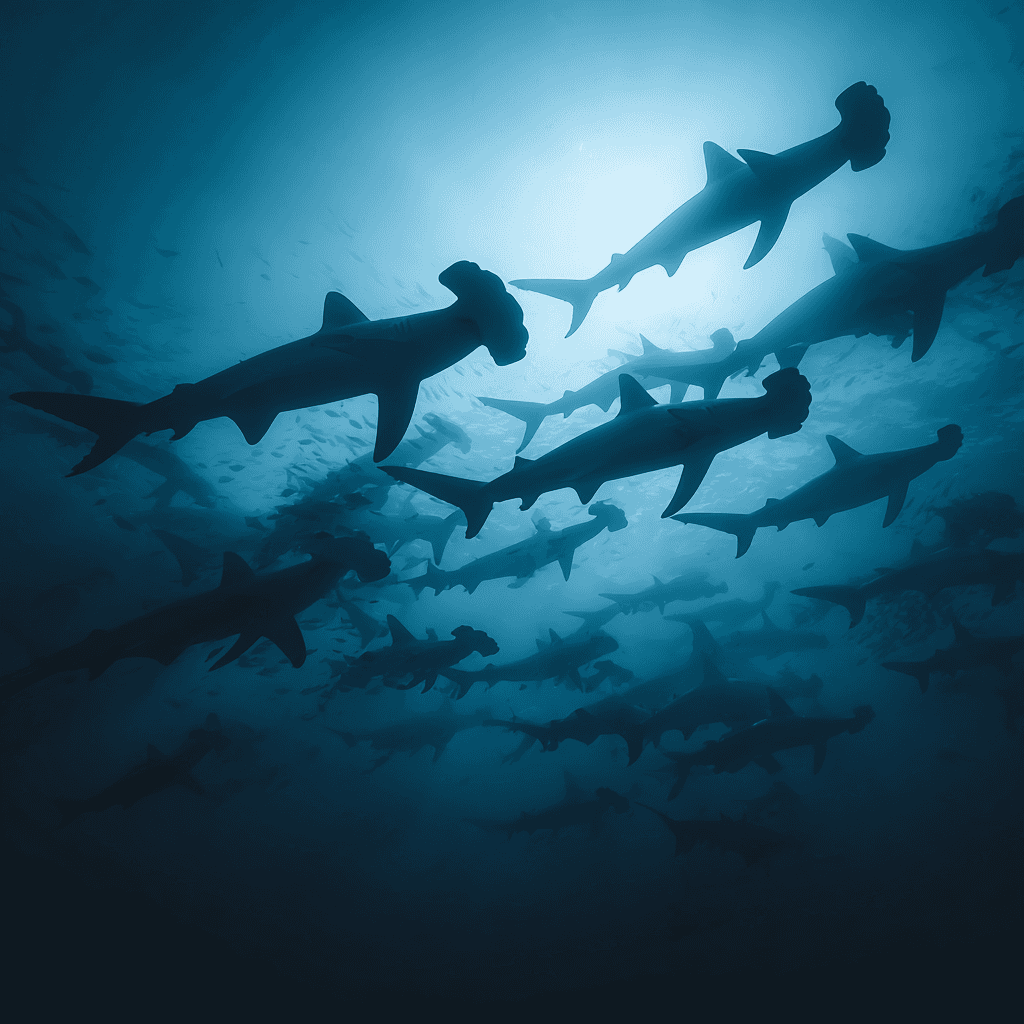
Underwater swimming with marine iguanas (show foraging behavior, temperature stress)
Close-up: Hold finches in your hand, see subtle beak size differences
Time-series data visualization: Graph 40 years of beak measurements alongside rainfall patterns
Ocean current visualization: Show how El Niño disrupts nutrient upwelling
Tortoise journey: Follow individual tortoise across their 100+ year lifespan, experiencing multiple climate shifts
Educational Goals:
Understand evolution as ongoing process, not historical event
See climate as evolutionary pressure
Grasp adaptation limits and extinction risk
Connect island lessons to global climate challenges
Target Audiences: Middle school through adult, science educators, international visitors
Duration: 35 minutes
Funding Partners: Galápagos Conservancy, Charles Darwin Foundation, UNESCO, Ecuador Ministry of Tourism, international conservation NGOs
Strategic Implementation: From Vision to Reality
Site Selection Criteria
Not every national park needs a dome immediately. Strategic rollout prioritizes sites where impact is greatest:
Tier 1: High-Impact Launch Sites (Years 1-2)
Yellowstone (4.5M visitors/year): Central positioning, iconic status, clear climate narrative
Yosemite (4.0M visitors/year): California market, water/drought relevance, strong donor base
Grand Canyon (4.7M visitors/year): Massive visitation, extreme weather impacts, multigenerational appeal
Great Smoky Mountains (14M visitors/year): Highest visitation, accessibility to eastern U.S. schools
Tier 2: Regional Education Hubs (Years 3-4)
Everglades (1.7M visitors/year): Urban connection (Miami), climate vulnerability, Latino/Caribbean audience
Glacier (3.0M visitors/year): Namesake crisis, international draw (Canadian proximity)
Rocky Mountain (4.7M visitors/year): Denver metro access, school group infrastructure
Acadia (3.9M visitors/year): Northeast gateway, seasonal programming opportunity
Tier 3: Specialized Programming (Years 5-7)
Olympic (3.1M visitors/year): Rainforest ecosystems, Pacific maritime climate
Zion (4.6M visitors/year): Desert adaptation, water scarcity narratives
Hawaii Volcanoes (1.3M visitors/year): Island ecosystems, Indigenous perspectives
Denali (600K visitors/year): Arctic/subarctic change, permafrost melt, Indigenous knowledge
Technical Specifications
Infrastructure Requirements:
Dome diameter: 40-60 feet (optimal for 100-150 person capacity)
Projection system: 8K+ resolution, seamless edge-blending
Audio: Spatial audio system (20+ channels)
Seating: Reclining seats with adjustable angles
Climate control: HVAC sized for full capacity in extreme weather
Accessibility: ADA-compliant entrances, wheelchair spaces, assistive listening devices
Building footprint: 6,000-8,000 sq ft (dome hall + lobby + restrooms + mechanical)
Operational Model:
Shows per day: 8-12 (depending on season)
Staff: 2-3 full-time (operations manager, education coordinator) + 4-6 seasonal (show operators, visitor services)
Content library: 5-7 different shows (school/family/evening programs)
Refresh cycle: New content every 18-24 months
Revenue model: Free general admission (park entrance covers), school group booking fees, evening special program tickets
Cost Structure & ROI
Capital Investment (per dome installation):
Construction: $1.2M-1.8M (varies by site-specific factors)
Projection/AV equipment: $400K-600K
Content production: $300K-500K (5-7 initial shows)
Site preparation: $200K-400K (utilities, access roads, landscaping)
Total: $2.1M-3.3M per site
Operating Budget (annual, per site):
Staff: $200K-280K
Utilities: $40K-60K
Maintenance: $30K-50K
Content updates: $50K-75K (every 2 years, amortized)
Marketing: $20K-30K
Total: $340K-495K annually
Revenue Potential:
Visitor enhancement: Increases average park stay by 1.5-2 hours → additional concessions/bookstore revenue
Educational partnerships: School districts pay $5-10 per student for aligned curriculum programs
Corporate sponsorship: Outdoor brands invest $50K-150K annually for naming/partnership
Foundation grants: Initial 3-5 year operational support ($200K-500K)
Federal reimbursement: Climate education infrastructure eligible for NPS improvement funds
Societal ROI (harder to quantify but critical):
Climate literacy: 100K-500K visitors per dome per year receive evidence-based climate education
Intergenerational impact: Students bring climate knowledge home, influencing family behavior
Conservation support: Educated visitors become advocates, voters, donors for park funding
Economic multiplier: Extended park stays boost gateway community economies
Long-term resilience: Climate-literate citizenry better equipped for adaptation challenges
Funding Pathways: Making It Financially Viable
Federal Grant Programs
1. National Park Service Climate Change Response Program
Funding amount: $2M-5M per project
Eligibility: Infrastructure that builds climate resilience and education
Application cycle: Annual, competitive
Match requirement: 25% (can include in-kind contributions)
Strategy: Position dome as dual-purpose—visitor education + staff training facility
2. Institute of Museum and Library Services (IMLS)
Relevant program: "Inspiring Americas: Projects for All" grants
Funding amount: $250K-1M
Eligibility: Educational infrastructure in informal learning spaces
Application cycle: Annual
Match requirement: None for planning grants, 50% for implementation
Strategy: Emphasize STEM education, underserved community access, digital humanities
3. National Science Foundation (NSF) Informal STEM Education
Funding amount: $500K-3M
Eligibility: Projects advancing public science literacy
Application cycle: Annual
Match requirement: Encouraged but not required
Strategy: Partner with universities for research component (measure learning outcomes)
4. Department of Energy Environmental Education Grants
Funding amount: $100K-500K
Eligibility: Climate change and energy education projects
Application cycle: Annual
Strategy: Focus on renewable energy solutions content, career pathway programming
State-Level Opportunities
State Tourism Infrastructure Bonds
Many states issue bonds specifically for tourism infrastructure improvements at state parks and attractions. Example structures:
California Natural Resources Bond: $54B approved for climate resilience and outdoor recreation
Colorado Tourism Infrastructure Fund: $10M annually for recreational improvements
New York Environmental Bond Act: $4.2B including outdoor education facilities
Florida Recreation Development Assistance Program: $30M annually for tourism infrastructure
Application Strategy:
Emphasize job creation in gateway communities
Highlight educational value for state residents
Demonstrate visitor attraction/retention
Partner with state tourism bureaus as co-applicants
Education Department Grants
State education departments often fund field trip infrastructure that supports curriculum standards:
California Education & Environment Initiative: Funding for outdoor education aligned with state standards
Texas Environmental Education Partnership: Grants for teaching resources and facilities
New York Environmental Education Program: Support for hands-on environmental learning
Private Foundation Funding
Conservation Foundations
National Parks Conservation Association: $100K-1M for park improvement projects
Yellowstone Forever: $50K-500K for Yellowstone-specific education
Yosemite Conservancy: $100K-2M for Yosemite interpretation and education
Grand Canyon Conservancy: $50K-1M for visitor experience enhancement
Climate & Environment Foundations
ClimateWorks Foundation: $500K-2M for climate communication and education
Grantham Foundation: $200K-1M for climate science communication
Pisces Foundation: $100K-500K for ocean and climate education
Oak Foundation: $250K-1M for environmental education and awareness
Family/Community Foundations
Approach high-net-worth donors in park gateway communities:
Jackson Hole (Yellowstone/Grand Teton): Significant philanthropic community with conservation focus
Moab (Arches/Canyonlands): Growing donor base focused on recreation and conservation
Estes Park (Rocky Mountain): Strong local foundation support for park programs
Application Strategy:
Lead with mission alignment (most conservation foundations prioritize education)
Include evaluation plan (foundations want measurable impact)
Highlight multi-year sustainability (show operational funding plan beyond grant period)
Offer naming opportunities (respectfully, for major donors)
Corporate ESG Partnerships
Outdoor Recreation Brands
Companies whose business depends on healthy ecosystems and engaged outdoor enthusiasts are natural partners:
Patagonia
Focus: Environmental activism, climate education
Partnership model: 1% for the Planet member, direct project grants $50K-500K
Activation: Co-branded educational content, employee volunteer days, retail fundraising campaigns
REI
Focus: Outdoor stewardship, youth engagement
Partnership model: REI Co-op Foundation grants $50K-200K, corporate sponsorship $100K-500K
Activation: Member drive participation, gear rental integrations at park domes
The North Face
Focus: Exploration, climate action
Partnership model: Corporate sustainability budget, brand alignment
Activation: "Explore Mode" campaign integration, athlete spokesperson participation
Eddie Bauer
Focus: Conservation legacy, family outdoor experiences
Partnership model: Product sales percentage, direct sponsorship
Activation: Limited-edition "National Parks Collection" with portion of proceeds to dome programs
Outdoor Industry Association
Focus: Industry-wide conservation advocacy
Partnership model: Multi-company consortium sponsorship
Activation: Annual summit at dome location, industry education credits
Energy & Technology Companies
Companies with climate commitments and ESG mandates:
Microsoft: Carbon negative by 2030 commitment, invests in climate education technology
Apple: Clean energy transition narrative, environmental education initiatives
Tesla: Electric vehicle adoption tied to climate awareness
First Solar/Sunrun: Renewable energy companies seeking public education opportunities
Partnership Structures:
Founding Sponsor: $1M+ multi-year, naming rights, board representation
Major Sponsor: $250K-999K, content co-creation, brand integration
Supporting Sponsor: $50K-249K, logo recognition, employee engagement programming
In-Kind Partners: Provide equipment, services, or expertise in lieu of cash
Implementation Roadmap
Phase 1: Foundation & Proof of Concept (Months 1-18)
Quarter 1-2: Partnership Development
Engage National Park Service headquarters (Washington D.C.)
Identify 2-3 Tier 1 pilot parks with enthusiastic superintendents
Secure initial foundation commitments ($500K-1M for feasibility and design)
Formalize scientific advisory board (climate scientists, park ecologists, education researchers)
Quarter 3-4: Design & Content Development
Complete architectural and engineering plans
Produce pilot content (20-minute show for lead park)
Secure NEPA (National Environmental Policy Act) approvals
Launch federal grant applications
Quarter 5-6: Construction & Launch
Break ground at pilot site
Begin staff recruitment and training
Develop curriculum guides and teacher resources
Execute launch PR campaign
Phase 2: National Expansion (Years 2-5)
Year 2: Validate & Refine
Operate pilot dome for full year
Measure impact: visitor surveys, student learning assessments, community engagement metrics
Refine operational model based on lessons learned
Publish case study for peer parks
Year 3-4: Regional Rollout
Launch 4-6 additional domes at Tier 2 parks
Establish shared content library (parks can license shows from each other)
Create traveling education team (support remote parks without permanent domes)
Build corporate partnership consortium
Year 5: Ecosystem Maturity
Operate 10+ domes across major park regions
Reach 2-3 million annual visitors
Train 500+ teachers in dome-integrated curriculum
Launch international dome (Galápagos, Great Barrier Reef, Serengeti partners)
Success Metrics
Quantitative
Visitors reached annually
School groups served
Teacher curriculum adoptions
Pre/post show knowledge assessments (student learning gains)
Visitor satisfaction scores
Community engagement (local resident attendance)
Operational sustainability (cost recovery percentage)
Qualitative
Visitor testimonials
Teacher feedback
Media coverage
Scientific community endorsement
Park ranger enthusiasm
Gateway community support
Long-Term Indicators
Alumni studies (track students 5-10 years post-visit)
Community climate literacy surveys
Park visitation patterns (are domes extending stay duration?)
Conservation career pathways (are dome programs inspiring future scientists?)
Addressing Challenges & Concerns
"Can We Afford This During Budget Constraints?"
Reframe: Climate education infrastructure isn't discretionary—it's essential. Consider:
Deteriorating trust: Misinformation about climate change undermines public support for conservation funding. Education is defensive spending.
Preventive investment: Climate literacy reduces costly emergency response needs. Educated communities make better adaptation decisions.
Revenue generation: Dome programming can become revenue-positive through school bookings, corporate partnerships, and extended visitor spending.
Competitive funding: Climate education projects access funding streams unavailable to traditional operations (EPA, DOE, climate foundations).
Federal precedent: The National Park Service has successfully pursued large-scale visitor experience improvements before:
Gateway Arch Museum renovation: $380M
Statue of Liberty Museum: $100M
Yellowstone Old Faithful Visitor Education Center: $27M
Climate education infrastructure operates at comparable or lower cost with broader impact.
"Will This Detract From Authentic Nature Experiences?"
Response: Immersive domes enhance rather than replace outdoor experiences:
Pre-visit orientation: Domes provide context before visitors hike, increasing trail experience quality
Weather/accessibility solution: Offer meaningful engagement when weather/physical limitations prevent backcountry access
Temporal expansion: Show visitors past and future landscapes they cannot otherwise experience
Systems understanding: Reveal invisible connections (atmospheric patterns, watershed dynamics, migratory routes) that enhance outdoor observation
Analogy: Museum curators don't believe exhibits replace viewing art—they provide essential context that deepens appreciation. Similarly, dome programs deepen understanding of the living landscapes visitors encounter.
Operational integration: Schedule shows to complement rather than compete with optimal outdoor times. Morning and evening shows leave midday for hiking.
"What If Content Becomes Politically Controversial?"
Response: Climate science is not political—it's physical reality. However, thoughtful communication strategies mitigate polarization:
Content Principles:
Evidence-based: Every claim backed by peer-reviewed research, cited on screen
Solutions-oriented: Balance problem documentation with action pathways
Non-partisan: Avoid political figures, party affiliations, or policy prescriptions
Local focus: Emphasize changes visible in this specific park, minimizing abstract global politics
Hope-forward: Highlight restoration success, adaptation innovations, and youth leadership
Operational safeguards:
Scientific advisory board: Climate scientists, park ecologists, education researchers vet all content
Community preview screenings: Allow local feedback before public launch
Multi-perspective programming: Include shows featuring Indigenous traditional knowledge, youth perspectives, community adaptation stories
Precedent: Climate education is already NPS policy. The Climate Change Response Strategy commits parks to science-based communication. Domes simply execute existing mandates more effectively.
"How Do We Maintain Content Relevance As Science Evolves?"
Strategy: Build content refresh cycles into operational planning:
Modular design: Shows structured in segments that can be updated independently
Annual data updates: Refresh glacier extent, temperature records, species observations yearly
Major revision cycle: Complete content overhaul every 3-5 years
Collaborative content library: Parks share production costs by licensing each other's updated shows
University partnerships: Graduate students in science communication gain thesis projects by producing updated content
Budget allocation: Reserve 10-15% of annual operating budget for content evolution. This is not luxury—it's essential to maintain credibility.
The Opportunity: Climate Education at Scale
Let's zoom out and consider what's at stake.
The Climate Literacy Gap
Despite decades of scientific consensus, climate literacy remains shockingly low:
Only 40% of Americans understand that human activities are the primary cause of current climate change (Yale Program on Climate Communication, 2023)
25% of high school graduates cannot explain the greenhouse effect
60% of adults don't know what to do to personally reduce emissions
This knowledge gap undermines every climate solution—from renewable energy adoption to community adaptation planning. You can't solve a problem people don't understand.
National Parks as Trusted Educators
National parks enjoy extraordinary public trust:
85% favorability rating (higher than Congress, media, or corporations)
Perceived as non-partisan institutions (rare in polarized era)
Multi-generational appeal (great-grandparents and toddlers visit together)
Experiential authority (people trust what they can see, touch, and feel)
This trust is a strategic asset. Information delivered in national parks lands differently than information delivered in classrooms, news media, or corporate settings.
The Math of Impact
If immersive dome climate education scales to just 20 national parks:
20 parks × 200,000 annual dome visitors per park = 4 million people annually
Assuming 30% are youth (students + young families) = 1.2 million young people per year
Over 10 years = 12 million youth with immersive climate education
Multiplier effect (students share with families, classes) = 30-40 million people influenced
That's 10% of the U.S. population reached through a 20-park network. It's the difference between a climate-literate citizenry and a confused one.
Generational Timing
Today's elementary and middle school students will be adults by 2040—the critical decade for climate stabilization. They will be:
Voters deciding on climate policy (2030s-2040s)
Engineers designing low-carbon infrastructure
Business leaders allocating trillions in capital
Parents teaching the next generation
What they learn now shapes what's possible then. National park dome experiences can be formative moments—the spark that creates a climate scientist, the memory that informs a vote, the experience that builds lifelong conservation commitment.
The Alternative
If we don't invest in climate education infrastructure, the void fills with:
Misinformation (coordinated campaigns to sow doubt)
Despair (uncontextualized bad news breeds helplessness)
Disconnection (abstract global crisis feels distant from daily life)
Inaction (people don't act on problems they don't understand)
That's not acceptable. Not when we have the technology, the audience reach, and the institutional infrastructure (national parks) to deliver transformative education at scale.
Call to Action: Build the Future of Conservation Education
If you're reading this, you're likely someone who can make immersive climate education infrastructure a reality with Origin Of Wonder Partnership:
For National Park Superintendents: Your park's educational mission is evolving. The next generation of visitors won't just ask "What happened here?" but "What's happening to this place, and what happens next?" You need infrastructure to answer those questions.
Next steps:
Review your visitor education strategic plan—is climate literacy explicitly addressed?
Convene your interpretive staff and ask: "How well do we explain climate impacts to visitors?"
Contact Origin of Wonder for a site feasibility assessment
Explore federal grant opportunities through NPS Climate Change Response Program
Engage your park's philanthropic partners (conservancies, foundations) about education infrastructure
For State Tourism Agencies: Your state's natural attractions face climate impacts. Proactive education builds resilient communities and protects long-term tourism economy viability.
Next steps:
Inventory state parks with 500K+ annual visitors—these are prime candidates
Survey tourism industry stakeholders—what education infrastructure gaps exist?
Include climate education in state tourism infrastructure grant criteria
Partner with state education departments to align outdoor learning with curriculum standards
For Conservation Department Directors: Climate adaptation requires public support. Education infrastructure transforms abstract policy into tangible experience.
Next steps:
Map conservation priorities to public engagement opportunities
Identify flagship sites where immersive education could build awareness (wetland restoration, reforestation, wildlife corridors)
Pilot immersive content at annual conservation summit or environmental education conference
Build immersive education into your 5-year strategic plan
For Environmental Education NGOs: You've built curricula, trained teachers, and engaged communities. Immersive dome infrastructure gives your programming a permanent, high-impact delivery platform.
Next steps:
Audit your organization's infrastructure assets—where are facilities aging or inadequate?
Explore partnership opportunities with nearby parks, universities, or science centers
Apply for IMLS or NSF grants with immersive education components
Convene stakeholder meetings with school districts, park services, and community leaders
For All Conservation Leaders:
The climate crisis demands educational innovation at scale. Traditional methods—well-intentioned but limited—cannot meet this moment. Immersive dome theaters offer transformative potential:
Temporal storytelling that makes decades of change visible in minutes
Systems thinking that reveals invisible connections
Multi-generational engagement that builds sustained coalitions
Evidence-based hope that inspires action rather than despair
We have the technology. We have the audience. We have trusted institutions (national parks) where this can happen.
What we need is coordinated commitment—public officials, philanthropists, corporate partners, scientists, and educators—aligned behind a vision: America's national parks as the world's leading climate education infrastructure.
Ten years from now, we want millions of young people to say: "I learned about climate change at Yellowstone. It changed how I see the world. It shaped who I became."
That's possible. Let's build it.
Resources & Next Steps
Get Started:
Site feasibility assessments: Contact Origin of Wonder for on-site evaluation and preliminary proposal
Grant writing support: Access templates and successful application examples
Content preview: Request demo reel of immersive climate education content
Partnership development: Explore corporate sponsorship, foundation funding, and multi-park consortiums
Contact Origin of Wonder:
Email: lars@originofwonder.com
Website & Inquiry form: www.originofwonder.com
The most powerful climate action we can take is education. Let's equip the next generation—and their parents—with the understanding, tools, and inspiration to build a livable future.
The glaciers can't wait. The coral reefs can't wait. The forests can't wait.
Neither can we.
About Origin of Wonder
Origin of Wonder builds immersive dome theaters at iconic natural and cultural destinations worldwide. Our mission: Transform how humanity understands and protects the living planet. We combine cutting-edge visual technology with conservation science to create experiences that inspire action.
From the Galápagos Islands to UNESCO World Heritage Sites, we partner with parks, governments, and NGOs to deliver education that changes minds—and behavior.
Ready to bring next-generation climate education to your park? Let's talk.