Business Case for Immersive Pre-Visit Education
in the Galápagos Islands, Ecuador
Executive Summary: The Conservation-Tourism Crisis
The Situation:
The Galápagos Islands welcomed approximately 270,000 visitors in 2024, with UNESCO warning that current growth trajectories could reach 1 million annual visitors by 2041. This archipelago—humanity's most important living laboratory for evolution—faces an existential threat from the very tourism that funds its conservation.
The Problem:
97% of species here are endemic (found nowhere else on Earth). Yet most visitors arrive ignorant of the evolutionary processes they're witnessing, the biosecurity threats their presence creates, and the delicate balance between tourism revenue (85% of local economy) and ecosystem protection.
The Solution:
Strategic immersive pre-visit education at Baltra or San Cristóbal airports, transforming 270,000 annual visitors from potential biosecurity threats into informed conservation advocates before they set foot on the islands.
The Investment: $950,000-1,100,000 per installation
The Returns:
Revenue: $550K-700K Year 1 (combined installation) Break-even: 16-20 months 3-Year ROI: 145-149% Biosecurity value: Estimated $500,000-1,500,000 annual cost avoidance. Conservation funding: $400,000-800,000 generated annually from educated visitors
The Galápagos Challenge: Numbers That Tell the Story
Tourism Growth Threatening Paradise
Year | Annual Visitors | Growth Rate | Key Event |
|---|---|---|---|
2007 | ~145,000 | — | UNESCO adds Galápagos to "World Heritage in Danger" list |
2010 | ~173,000 | +19% | UNESCO removes from danger list (controversially) |
2019 | ~271,000 | +57% | UNESCO sounds alarm again about tourism growth |
2020 | ~11,000 | -96% | COVID-19 halts tourism (reveals 85% economic dependency) |
2024 | ~270,000 | Back to 2019 | Growth trajectory unsustainable |
2041 | ~1,000,000 | +270% | if current growth continues |
The UNESCO Warning
UNESCO's 2024 State of Conservation Report explicitly identifies "explosive tourism growth" as the primary threat to the archipelago. The organization emphasizes that increased tourist arrivals drive:
Immigration to the islands (population grew from 2,000 in 1950s to 32,000+ today)
Cargo shipments carrying invasive species
Air traffic multiplying biosecurity risks
Infrastructure strain on fragile ecosystems
Overtourism at sensitive visitor sites
The Economic Dependency Trap
Tourism revenue: 85% of Galápagos economy,
Park entrance fees: $200 per adult, $100 per child (raised in 2024, unchanged since 1998 prior)
Annual park fee revenue: ~$40-50 million
What Visitors Don't Understand (And Why It Matters)
The Knowledge Gap Is Dangerous
Most Galápagos visitors arrive with awareness limited to:
"Darwin studied here"
"Unique animals like giant tortoises and blue-footed boobies"
"It's a bucket list destination"
What they don't understand kills species:
Biosecurity Ignorance:
Why checking shoes for seeds before boarding boats matters (invasive species)
How insects in luggage can destroy endemic species
Why feeding animals (even accidentally) disrupts evolution
How human pathogens transfer to wildlife with no immunity
Evolutionary Blindness:
That they're witnessing adaptive radiation in real-time
Why each island's finches are different (and why that matters)
How isolation creates speciation
What "endemic" means and why 97% endemic species is unprecedented
Conservation Disconnect:
The invasive species crisis (goats, rats, ants decimating native species)
Why maintaining distance from animals isn't tourist theater—it's survival
How their spending directly funds species protection
What behaviors help vs. harm conservation
Result: Well-intentioned visitors cause damage through ignorance, not malice.
The Immersive Education Solution:
Strategic Gateway Intercept
The Model: Installations Options
Location 1: Baltra Airport (Isla Baltra) | Location 2: Puerto Villamil (Isla Islabela) |
|---|---|
Santa Cruz island hub | Isabela Island ( near port) |
~65% of total arrivals (~175,000 annually) | ~10% of total arrivals (~45,000 annually) |
Captive audience: all visitors pass through after landing | Growing land-based tourism hub, airport in planning, |
The Timing Advantage:
Visitors arrive on planes from mainland Ecuador (Quito or Guayaquil). Between deplaning and beginning their Galápagos experience lies a perfect 20-30 minute window. They're:
Fresh from travel (not exhausted from island activities)
Anticipatory (excited to learn before experiencing)
Captive (waiting for luggage, transfers, or guides)
Mentally available (not managing logistics yet)
Lets dive into the experience:
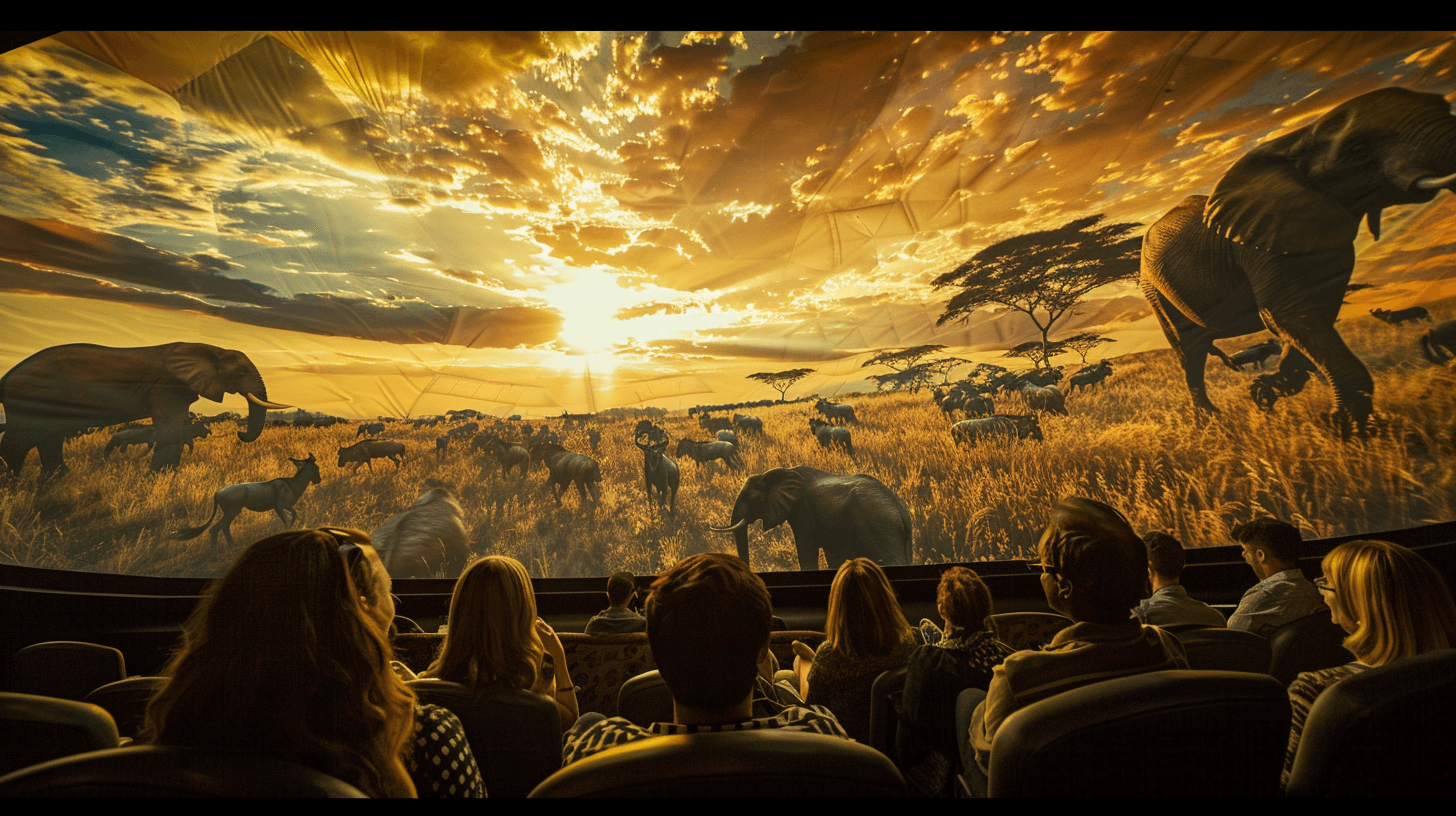
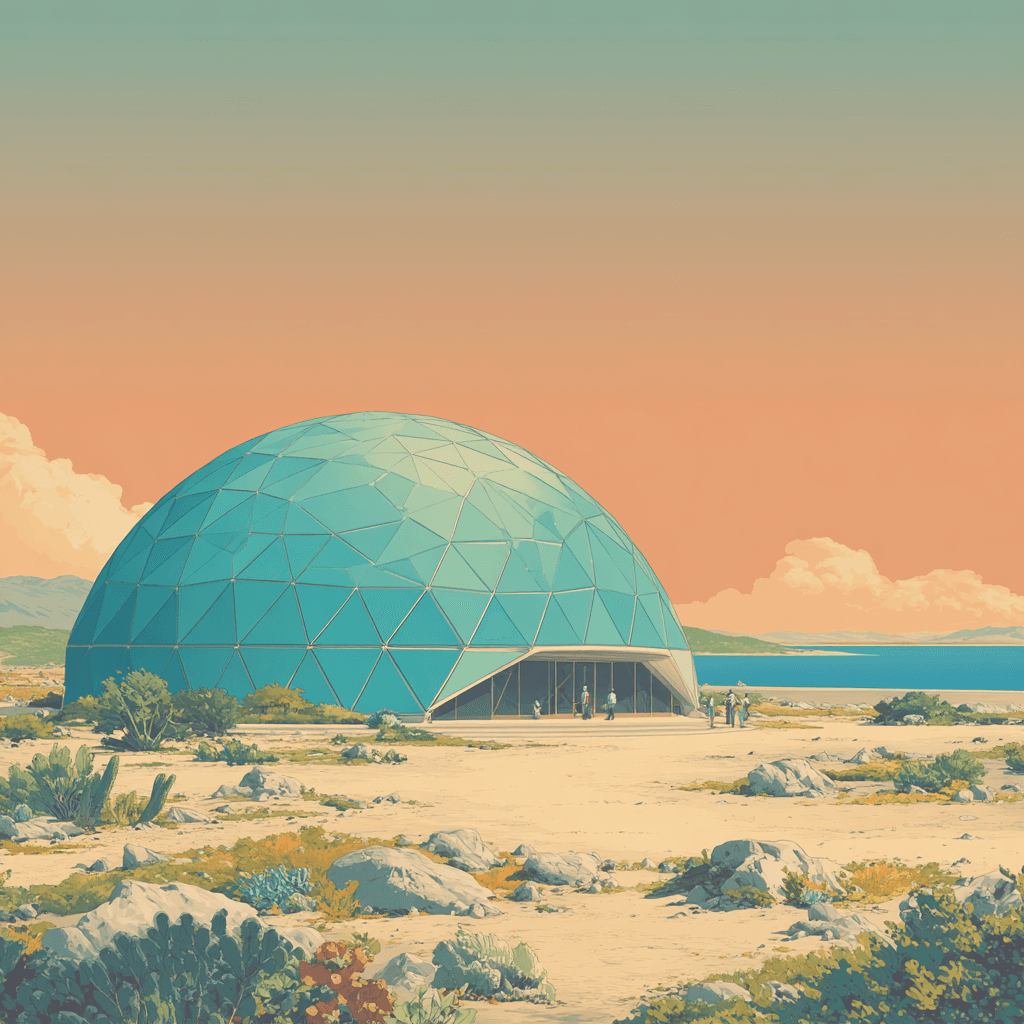
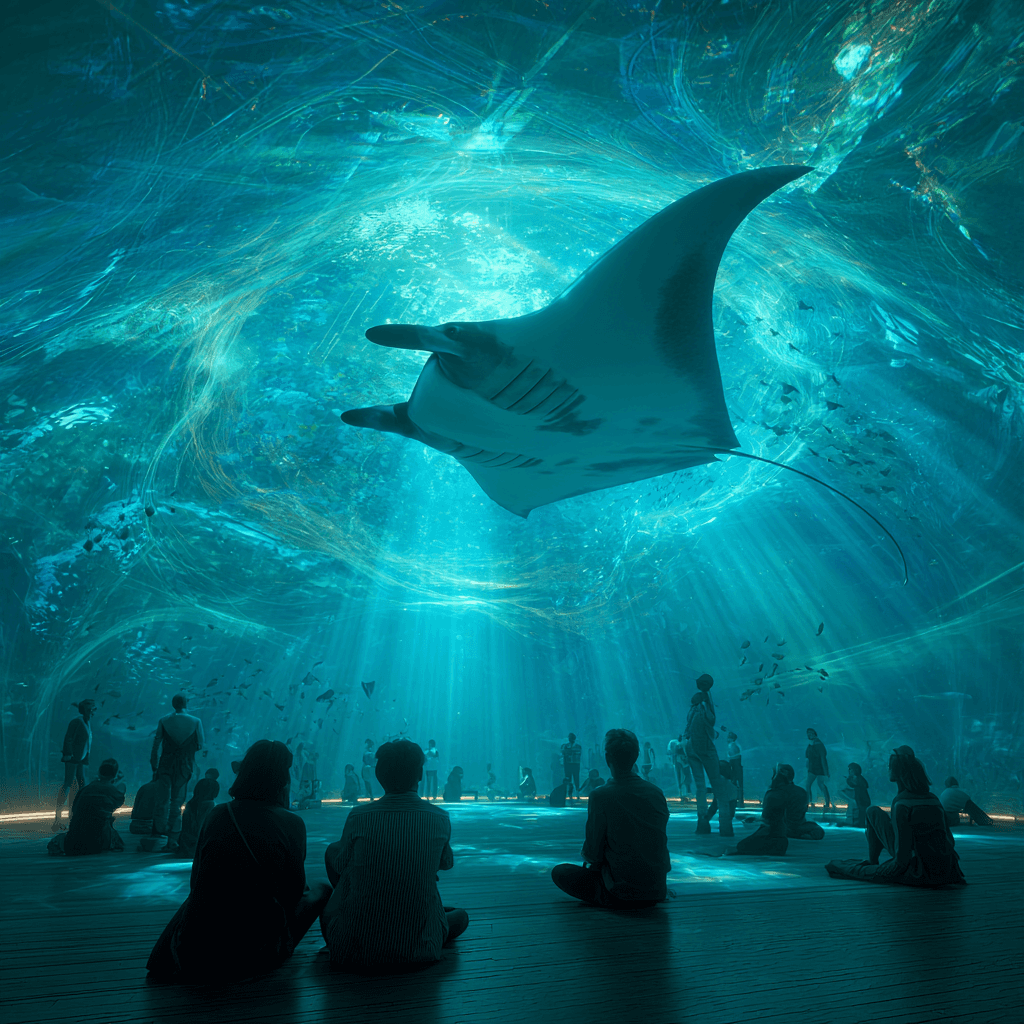
Inside climate-controlled geodesic domes at each airport, 20-minute immersive 8K fulldome experiences reveal:
Time | Theme |
|---|---|
Minutes 1-6: |
|
Minutes 7-12: |
|
Minutes 13-18: "The Invisible Threats" |
|
Minutes 19-20: |
|
Financial Model: Revenue Across Four Streams
Reference Model:
Baltra Airport (Santa Cruz Gateway)
Annual Visitors: 175,000
Target Capture Rate: 30% (mandatory before exiting airport perimeter)
Annual Portal Visitors: 52,500
$18 ticket (Note, that in US a immersive show average ticket is $27-45 ):
Premium destination commands premium pricing
Visitors already paying $200 park entrance fee
Average Galápagos trip cost: $3,000-8,000 per person
$18 represents 0.2-0.6% of total trip cost
Value proposition: "Understand what you're seeing"
18USD X 52.500 tickets = make your own calculation. Contact us to verify
The Conservation Value: Beyond Revenue
Biosecurity Cost Avoidance | |
|---|---|
Current biosecurity challenges: |
|
Annual biosecurity budget: | |
Impact of educated visitors: |
|
Impact of educated visitors: |
Community Economic Multiplier | |
|---|---|
Educated visitors: |
|
My thoughts are that the additional local economic impact could reach up to $4-6 million annually |
Investment Requirements
Installation Breakdown = $ 880K + plus additional feature on request | |
|---|---|
Dome Structure | $300k |
Dome Projection & Audio System | $150k |
Transportation | $30k |
Film recording | $200k |
Dome Site Preperation | $100k |
Project Management | $100k |
Land on site | unknown |
Annual Operating Costs = $200K | |
|---|---|
Initial Marketing | $20k |
Staff Operation | $150k |
Maintainance & Product Update | $150k |
Proposed Partnership Model
Lead Investor: Private Investors + Origin Of Wonder
Co-Investment: Galapagos National Park + Galápagos Conservation Trust + Nature Capital Fund + Ecuador Ministry of Tourism
Operational Partner: Origin of Wonder (turnkey operator)
Revenue Share Structure:
100% to partner consortium (investment recovery)
Ongoing revenue: 40% partners / 60% Origin of Wonder ( required to install domes in other destination)
Risk Analysis:
What Makes This Different from Other Destinations
Unique Galápagos Advantages | |
|---|---|
Captive Audience |
|
Premium Visitor Profile |
|
Conservation Urgency |
|
Risks and Mitigation
Risk 1: Visitor Resistance to "Mandatory" Education |
|---|
Mitigation:
|
Risk 2: Political/Bureaucratic DelaysLikelihood: Moderate-High (Ecuador bureaucracy can be slow) |
Mitigation:
|
Risk 3: Content Becoming Outdated |
Mitigation
|
Implementation Timeline: 18 Months to Launch
Months 1-6: Partnership Formation & Approvals
Month 1-2: Initial consultations with Galápagos National Park Directorate, Ecuador Ministry of Tourism
Month 3-4: Partnership agreements, investment commitments, legal structure
Month 5-6: Environmental permits, site approvals, construction permits
Months 7-12: Content Production
Month 7-8: Scriptwriting with Charles Darwin Foundation scientists, conservation experts
Month 9-10: On-location filming across islands (requires special permits for protected areas)
Month 11-12: Post-production (editing, VFX, 8K rendering, multilingual voice synthesis)
Months 13-16: Infrastructure Deployment
Month 13-14: Dome fabrication and shipping to Galápagos
Month 15: Installation at Baltra Airport or strategic location
Months 16-18: Testing & Launch
Month 17: Beta testing with 500-1,000 visitors, feedback integration
Month 18: Official launch coordinated with Ecuador Tourism campaign
Revenue Generation Begins: Month 18
Success Metrics: How We Measure Impact |
|---|
Financial KPIs
|
Conservation KPIs |
Biosecurity Compliance
|
Visitor Behavior
|
Species Knowledge
|
Conservation Support:
|
Community Impact KPIs |
Local Economic Benefit:
|
Resident Sentiment
|
Why Now: The Perfect Storm for Action
UNESCO Pressure
The 2024 State of Conservation Report explicitly calls for innovative visitor education approaches. Ecuador's government is under international scrutiny to demonstrate conservation leadership. This creates political will for bold solutions.
Tourism Recovery Post-COVID
Visitor numbers rebounded to 2019 levels by 2024. This is the moment to implement education infrastructure before growth accelerates further. Acting now intercepts 270,000 visitors annually before they become 500,000+.
Technology Maturity
AI-assisted content production reduces costs 40-50% vs. five years ago. Mobile dome technology enables rapid deployment. 8K projection creates genuine immersion. The technology stack is mature and proven.
Funding Availability
International conservation organizations prioritize Galápagos. Potential funding sources from:
Galápagos Conservation Trust donors
UNESCO World Heritage Fund
Inter-American Development Bank (sustainable tourism initiatives)
Private foundations (Leonardo DiCaprio Foundation, etc.)
Carbon offset programs (reduced tourism impact)
The funding landscape has never been more favorable.
Market Demand
Post-pandemic travelers increasingly seek meaningful, educational experiences. 61% of travelers (especially younger demographics) prioritize learning and impact. Galápagos visitors skew heavily toward this profile.
The Competitive Advantage: Why Galápagos Leads
If Galápagos implements comprehensive immersive education, it becomes the global model for conservation tourism. This creates:
International Recognition:
UNESCO best practice case study
Media coverage (BBC, National Geographic, etc.)
Academic research site (tourism/conservation scholarship)
Awards and accolades
Competitive Positioning:
"The only place where you truly understand what you're seeing"
Premium pricing justified by educational quality
Differentiation from cruise-focused competitors
Brand leadership in sustainable tourism
Replication Opportunity:
Other UNESCO sites will copy the model
Galápagos establishes licensing revenue stream
Content becomes template for similar destinations
Ecuador positions itself as conservation tourism leader
Next Steps: How to Move Forward
Step 1: Exploratory Meeting (No Cost) | |
|---|---|
Participants:
| Agenda:
|
Timeline: Schedule within 30 days | |
Step 2: Feasibility Study ($5000 - 25,000) | |
Deliverables:
| |
Timeline: 8-10 weeks from engagement | |
Step 3: Partnership Agreement & Funding | |
Actions:
| |
Timeline: 3-6 months (Ecuador bureaucracy variable) |
Darwin's Laboratory Deserves Darwin-Level Innovation
The Galápagos Islands changed humanity's understanding of life on Earth. Charles Darwin's observations here led to the theory of evolution by natural selection—the foundation of modern biology.
Today, the islands face a threat Darwin couldn't have imagined: being loved to death by the very humans who seek to understand what he discovered.
270,000 annual visitors. Growing to potentially 1 million by 2041 - hopefully not!!!
Each one a potential biosecurity threat. Each one arriving ignorant of the evolutionary miracles around them. Each one capable of causing harm through ignorance, not malice.
Traditional education has failed. Audio guides don't work. Museum displays go unread. Tour guides can't reach everyone. The crisis accelerates.
Immersive education offers a solution as innovative as the islands themselves:
Strategic gateway intercept
Transformation from potential threat to conservation partner
Revenue generation instead of budget consumption
Measurable behavioral changes protecting endemic species
Economic sustainability for local communities
Global leadership in conservation tourism
The investment & return: $880k for one installations, 18 month to operation, $500 to 950K Year 1 revenue, plus $500K-1.5M annual biosecurity savings + immeasurable species protection
The alternative: Continue current trajectory toward UNESCO "World Heritage in Danger" re-listing, ecosystem degradation, and the slow death of Darwin's Laboratory.
The Galápagos deserves innovation worthy of its importance. Immersive education is that innovation.
Contact Origin of Wonder
Ready to lead the global conservation tourism transformation?
📧 Email: lars@originofwonder.com
📱 WhatsApp: +49 160 90819576 / +593 99 381 7593
🔗 LinkedIn: Connect with Origin of Wonder
Let's schedule an exploratory meeting with key Galápagos stakeholders.
Timeline: 30 days to initial meeting, 18 months to revenue generation.